Tag Archives: bass

Dumpstaphunk, The Mint

March 1, 2012


Seriously 'phunked at The Mint

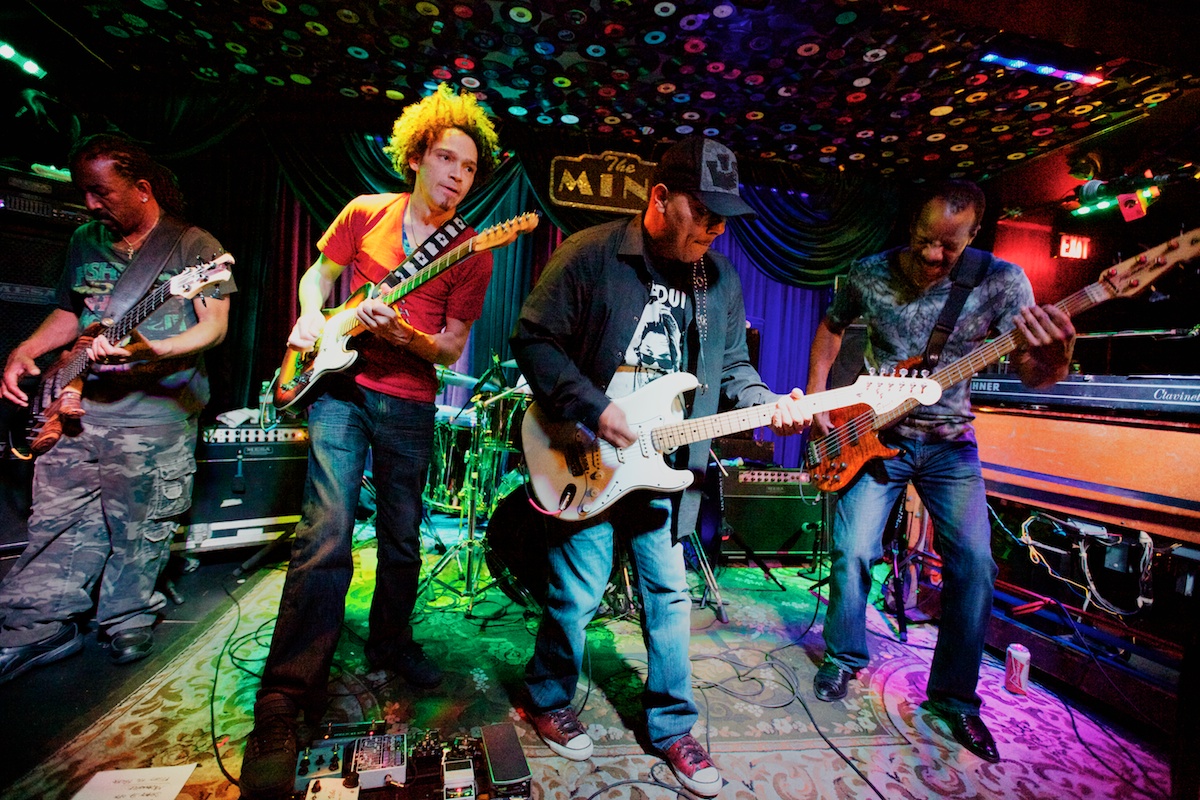
Dumpstaphunk is slippery, stinky, smelly, funked up stuff. It says so in the name. We get it, but just to make sure nobody misses the point, Nick Daniels III and Tony Hall lock up dueling basses at every D-phunk gig. The prowess of the players is unquestioned, the history and Neville legacy familiar. Ivan’s indulgences and 14 years sobriety. His time as a Stones/Richards sideman. The fat Hammond sound and rich vocals he’s cultivated with Dumpstaphunk since 2003, along with numerous other projects and collaborations. Cousin Ian carrying the torch with the Funky Meters. Tony Hall’s double barreled Strat/bass attack and emcee theatrics. Nick Daniel’s III’s powerful digits. New addition Nikki GIaspie’s huge resume and Berklee chops. It all adds up to a solid unit that puts it in the dumpsta night in, night out.


Tony Hall, two basses are badder

Back in the day, Ivan Neville had more than a few residencies at The Mint and he’s no stranger to LA these days, either. The last time I caught Dumpstaphunk in town, they headlined a double bill with Rebirth at the Roxy and the energy was crazy. This time around, they were playing a room half that size over two nights. Scary. The LA dates kicked off a March tour schedule more demanding than a 2012 NBA road trip (14 dates in 24 days in California and the southeast). Dumpsta’s latest, Everybody Want Sum, was released in November and Jazzfest is around the corner, so I was counting on a good night. And with tunes like “Greasy Groceries”, “Stinky”, “Standing in Your Stuff” and “Everybody Want Sum” in the repertoire, I’m pretty sure ballads were checked at the door.


Ivan Neville at The Mint

The Thursday show I caught didn’t get going until minutes before Friday. From the get go, the band was sticky tight. Between the Hall/Daniels III twin bass attack and Ivan’s clavinet, the ‘phunk felt plenty good. “Everybody Want Sum” from the new album has a perfect R&B soul hook that could be easily mistaken as a Sly Stone cover and featured nice Hammond work from Ivan Neville. The rubbery dual bass mixed well with Ian Neville’s right on top of the beat rhythm work. With “Blueswave”, Dumpsta moved to an almost Texas like stomp and some gritty Strat slinging by Tony Hall.


Nikki Glaspie holding it down

The stew really started to simmer closer to 1 AM, as affirmed by a crowd yell of “taking it to a whole other level!” And that was before the band even launched into “Deeper” (from Everybody Want Sum) > “Put It in the Dumpsta” (a D-phunk staple). Ivan Neville and Tony Hall turned “Dumpsta” into the best kind of group therapy, totally groove heavy with some healthy demon exorcising for good measure. “Living in a World Gone Mad” (from the 2007 EP, Listen Hear) brought guest Val McCallum to the stage (Jacksh*t, Lucinda Williams), and McCallum tore into his solos with sufficient fury to smoke out the room, clearly enjoying trading lines with Ivan’s Hammond. The gloppy dual bass interplay was especially pungent with the jam rock feel of “Lt. Dan” and the pre-encore set closed with the almost gospelly hinted call and response of “Meanwhile” (from Listen Hear).


Tony Hall and Ivan Neville, 1 AM and warming up

Over the years I’ve been to my share of Dumpsta shows, and often took them for granted as just another NOLA side project that dependably delivered. The Mint gig brought me back into the fold with deeper appreciation for the band. High energy and high impact, drawing funk influences from the best of the Meters, James Brown, Sly Stone, Prince and countless others to shape their sound with precision and soul. Meaty stuff. Don’t miss them at Jazzfest.


Ivan Neville, Jazzfest 2010


Posted in Reviews | Also tagged , , , , , , , , , , , , , , , , , , Leave a comment

Return to Forever IV, Greek Theater

September 20, 2011


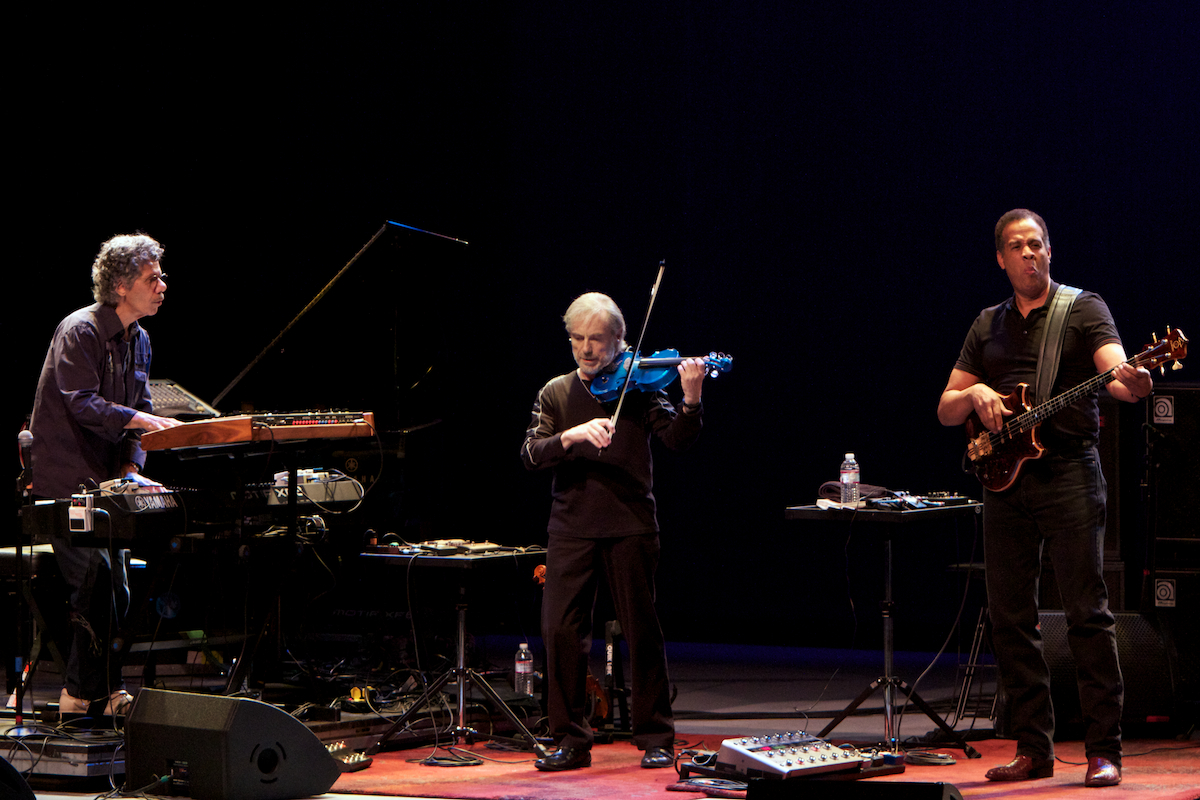
Chick Corea, Jean-Luc Ponty and Stanley Clarke

Chick Corea, Jean-Luc Ponty and Stanley Clarke

There are only so many seminal musical moments in one’s life, and the first time I saw Return to Forever live was one of them.  I felt as if my head cracked open and exploded from the inside.  But I digress.

As a teen of the 70s, I was drawn (without explanation) to artists signed to Manfred Eicher’s ECM (e.g., Edition of Contemporary Music) label.  It wasn’t just the stunning zen like imagery on the cover of every pressing.  And I was probably still too young to fully appreciate the unprecedented freedom Eicher the producer afforded his international roster of artists any time they entered the studio.  Still, something about the utter musical liberation completely unmoored from tradition and the mainstream got its hooks into me.  Even if some of the music was so arcane and outside to my ears, I took pride in my ability, if not patience, to expose myself to such intellectual pursuits that aimed straight for the head.  I didn’t read Kerouac or Ginsberg (at least until later), I listened to Jan Garbarek and Terje Rypdal.  This from a kid who had been spinning Zeppelin, the Allmans, the Who, the Stones and anything else guitar driven and blues influenced since I was a wee lad.  It was truly a new universe of possibilities.   I had heard Miles, maybe a little Coltrane, and some of the more mainstream CTI catalog like Freddy Hubbard, George Benson (before he tunefully opened his mouth) and Hubert Laws, but my jazz vocabulary was limited to about, well, what you would expect for a musically curious 14-year old in the earlyish-70s.  ECM blew that door wide open and I was introduced to the likes of Gary Burton, Pat Metheny, Ralph Towner, John Abercrombie, Keith Jarrett, and yes, Chick Corea, for the first time.

Light as a Feather (released on Polydor), didn’t blow my mind, it blew me away.  This was world influenced jazz not bound by tradition, but grounded in the rich humus of an ancient rainforest and stirred to flight to move body and spirit. Flora’s ethereal refrains, the killer sound of Chick’s Fender Rhodes running fleetly in step with Airto’s can’t keep it in frenetic pace.  The quieter moments when the ensemble steps back and Stanley Clarke’s tone is as fat and satisfying as a deep blue lake, then moves and hustles like a greyhound while never losing that same tone.  Joe Farrell’s tenor and flute a perfect foil to all, with solos that breathed and inspired.  This was jazz as I’d always wanted to hear it.

Flash forward a year or two, and the influence of guitar heavy rock was absorbed by jazz players everywhere, for which many a critic hold Miles’ ”Bitches Brew” accountable and certainly the alums of that project, Chick Corea and John McLaughlin among them, embraced with great enthusiasm.  This was hyper-attenuated, black hole dense stuff not for the faint of heart.  Of course, I took to it like a narcotic, the denser, the more complex and precise the playing, the better.  I ate it up.  Mahavishnu Orchestra’s Birds of Fire or Inner Mounting Flame, or RTF’s Hymn to the Seventh Galaxy were not exactly meditative and introspective.  My unhealthy attachment to jazz fusion was an acting out, not a cry for help, but a need to be different.  It was my ‘90s grunge phase, just 20 years earlier, it didn’t get me a lot of dates, but I made some good male friends with similar musical tastes.

Which brings me back to the first time I saw RTF live.  Somehow, my 15-year old self and a buddy found our way into the legendary Troubadour for their first tour with Al DiMeola.  We were seated at the foot of the stage and to open the show, Scatman Crothers, who must have been in his mid-60s at that point, came out armed with nothing more than a ukulele and a lot of courage.  He entertained the room for a half-hour or so.  Herbal substances may have been involved and the incongruity of the billing had my not so nimble mind confused, and the anticipation for the headliner on high boil.  This was the “Where Have I Known You Before” tour and from the moment these four guys hit the stage, it was lights out.  I had never experienced music so physically imposing live.  The room could not contain the intensity.  The barely out of his teens DiMeola had recently replaced Bill Connors and Chick was a long way from the gentle Fender Rhodes sound of Light as a Feather.  This was knife edge stuff.  Lenny White must have had four hands and Stanley Clarke was simply a force of nature.  The world looked different, brilliant, potentialized after this show.

Not until recent years have I dared to revisit much of this music, fearful that time would not treat it kindly in the 2000s.  To the contrary, our downloadable era of forgettable singles, classic rock pimped to the extremes, faux playback that fills arenas and Garage Band, reflects rather well on the jazz fusion pioneers of the ‘70s.  In fact, the in your face compositional and technical brilliance expressed by RTF and others stands out as strikingly immediate, pungent and real.  So, it was with great anticipation I headed to the Greek to hear the fourth gen of the band (billed as RTF IV).

After a 30-year break, this tour is the second RTF reunion in 3 years and has a slightly different look.  The core of Corea, Stanley Clarke  and Lenny White remains intact and is interestingly augmented by ‘70s fusion pioneer in his own right, violinist Jean-Luc Ponty, with Frank Gambale stepping in for DiMeola.  The buzz for the tour has been very strong, the band reaching back to cover signature compositions including Corea’s “Spain”,  Ponty’s epic “Renaissance” and Clarke’s “School Days”.  Sets for earlier dates had been consistently 8-9 tunes in length ensuring ample exploration from all.

The Greek was filled.  A great sign to begin with that this music still has a strong audience.  And it was an appreciative one at that.  The performance was introduced by none other than RTF aficionado Kareem Abdul Jabbar.  Kareem, not known for his public verbosity was warm and chatty, and that’s saying a lot right there.


Master of Ceremonies

Master of Ceremonies

Opening with “Medieval Overture” (from 1976’s Romantic Warrior), RTF IV launched headfirst into what would be an off the charts night.  With Ponty effortlessly blending into the band, and interestingly enough, lending the same instrumentation that defined Mahavishnu (with whom he played in the band’s later years), the virtuosity of the RTF unit was on full display and would remain so throughout the 100+ minute performance.  The control and finesse to take the composition through its entire dynamic range, each player matching the other note for rapid fire note was pretty staggering, as it was for “Captain Senor Mouse” (from 1973’s Hymn to the Seventh Galaxy) which followed.  “Captain Senor Mouse” had Chick standing and ready to jump with the composition’s Spanish influenced flourishes and synth runs, accompanied by Frank Gambale’s uncanny ability to turn on every twist and accent.  Dipping again into Romantic Warrior (three of the nine tunes from the performance were off this album) for Lenny White’s “Sorceress” and then segueing into “Shadow of Lo” (from 1974’s “Where Have I known You Before”), the piece began with a lengthy intro featuring fine work by Ponty that morphed into a funk groove.  As the cool night air met the intensity of the stage, steam was emanating from all the players, and Lenny White in particular appeared to be the answer to the country’s energy issues.  With the segue into “Shadow of Lo”, Chick seamlessly moved between has Yamaha grand and synth/electric keys.  The bridging/blending of acoustic and electric throughout the evening was a pleasant surprise and a trick to pull off, given the character and intensity of the band’s overall sound and compositional approach.  On these (and other) tunes, each player found new ways to converse with one another with great moments of interplay between Corea and Ponty, and especially Corea and Clarke.  RTF IV are giants of musicians and the touch and finesse they bring to material that could so easily become heavy handed is beyond impressive, it’s a feat that defies science.  Yes, I’m speaking superlatives, but it was that good.


Chick Corea, where have I known you before?

Chick Corea, where have I known you before?

A moment about Stanley Clarke.  Few living musicians have transformed the bass into a lead instrument the way Stanley Clarke has.  Period.  And the man is in fighting shape. Heck, until he stood next to Kareem, I’d almost take Clarke to get the better of a one-on-one between the two.  For Ponty’s”Renaissance” (from his 1976 Aurora), Clarke pulled out his upright and Ponty put down his trademark blue electric as the whole band went acoustic.  Clarke played below the bridge, top of the neck, slapping, thumbing, fingers moving faster than the flying horsehair of Ponty’s bow.  His solo was a highlight in a performance full of highlights.  As the audience found out later in the evening (with all but Gambale taking turns as emcee chatting warmly with crowd), Clarke had many friends and family at the show and no doubt even more inspired to be at the top of his game.  On his “After the Cosmic Rain” (also from Hymn to the Seventh Galaxy), Clarke’s fingers were dancing faster than a flamenco master while RTF moved from galloping Spanish dance to total swing and back again.


Stanley Clarke and Frank Gambale, sheer mastery

Stanley Clarke and Frank Gambale, sheer mastery

The title cut from Romantic Warrior displayed glimpses of Chick’s classical side with Clarke later pushing him to swing again, harder (perhaps Ponty’s influence brought these occasional swing elements into the mix).   Corea’s “Spain” (from 1972’s Light as  a Feather) is easily considered a contemporary jazz classic, with many varied interpretations through the years (including his own).  Beginning with an almost somber intro by Ponty, the entire RTF unit simply flew from start to finish with Lenny White engaging Corea in a brief duel of sorts to punctuate and play with the song’s familiar time.  Perhaps most impressive, however, was the ability of Corea to engage 5,000 people in a jazz sing along.  Not a few la-la-las, but up and down and around the composition’s complex melodies, echoing Chick’s keyboard runs.   Corea was introduced earlier in the set as simply “The Maestro”.  After pulling that off, I couldn’t put it any better.


The Maestro

The Maestro

Clarke’s “School Days” (from Clarke’s 1976 album of the same name) provided a raucous “encore” to the evening with opener Dweezil Zappa duking it out with Gambale, and Clarke practically shredding his 4-string to pieces.  The interplay with Ponty, Clarke and Corea was dazzling and there were enough 256th notes (or so it seemed) to go around for everybody.  As the set finished and the house lights went up, RTF remained on stage greeting friends, shaking hands with fans and hanging out.


The Zappa legacy replete with full circular motion

The Zappa legacy replete with full circular motion

Zappa Playing Zappa was an appropriate first act, especially with Jean Luc Ponty’s connection to Frank (Exhibit A, 1970’s King-Kong: Jean Luc Ponty Plays the Music of Frank Zappa).  Chick Corea joined the band mid-set for  “King Kong” to Moog it up, and trade licks, wails and squelches with Dweezil.  The elder Zappa’s SG playing is legendary and under-acknowledged and Dweezil eerily matches that guitar voice and fury.  In fact, he custom built his SG to replicate his father’s and the replica is so accurate, it is often mistaken for Frank’s original guitar by fans (so says Wikipedia).  Many Zappa “hits” ensued including “Don’t’ Eat the Yellow Snow” (replete with full circular motion), “St. Alfonzo’s Pancake Breakfast (from 1974’s Apostrophe) – where I stole the margarine, “Dancin’ Fool” (from 1979’s Sheik Your Booti) and “Pojama People” which opened the set (from 1975’s One Size Fits All).  Ben Thomas’ vocals were uncanny in capturing Frank’s inflection and humor.  This is a musical legacy that truly lives on, however acquired a taste.


Dweezil gets some air

Dweezil gets some air

RTF still plays as if possessed by a single Vulcan mind meld and the performance at the Greek was nothing less than astonishing (another superlative).   I latched on to the cerebral appeal of the music when I was younger and am now celebrating its maturity, cohesion and warmth.  Yes, warmth that comes from generations of playing together, that pushes and challenges each individual, and the exuberance from everyone on stage at the Greek.  Cohesion that comes from balancing quieter moments of introspection and thunderous power to a satisfying resolution.  Maturity that comes from almost unexplainable intuition and nuance.  For me, it really was a return.  A reminder of the sheer power of contemporary music and its timelessness.  Return.  To Forever.

Postscript:  A special shout out also goes to Yamaha, to which Chick Corea has been a loyal customer for many years, and whose sponsorship helped make this tour (and blog post) possible.


Posted in Reviews | Also tagged , , , , , , , , , , , , , , , , , , 1 Comment

Moonalice, The Mint

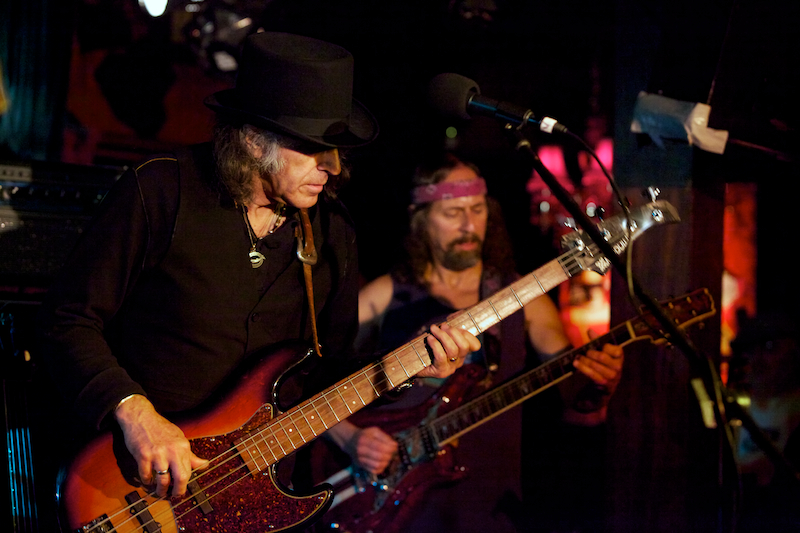
The esteemed Pete Sears, with Roger McNamee

August 6, 2011

“Moonalice is a band of seasoned musicians who feel that live music should be a communal experience where the listener and musicians feed and derive inspiration from each other. Their songs try to speak to everyone, mixing a variety of genres with extended musical improvisations that evoke a sense of adventure and exploration.”  So says their story on www.moonalicetv.com, the first HTML5 driven band site that allows fans to HD stream any live performance to their iPads, iPhones, etc.  What, are these guys from the future?  Well, for sure, behind the mythology that is Moonalice, behind the gloriously handcrafted homage posters for each and every show, behind the jam rock immersion and the Dead elephant in the room, stands a band of the now.  Look under the hood, and you see great touring musicians of 30+ years, the likes of which just only seem to be getting better, and no doubt, they lean heavily toward their tied-dyed twirling brethren.   The Phil and Friends, Other Ones, Dave Nelson Band, Hot Tuna, Jefferson Starship, Bruce Hornsby CVs merely fortify the obvious.  But Moonalice is not just of, or about, the past.  Wrong.  They climbed on top of the social media age and turned traditional music industry business models on their collective asses.   Not a lot of self-proclaimed hippie bands can credibly sit side-by-side with the next generation’s ProTools and banjo indie hipsters to provide total accessibility to their music and shows free of industry pollution to build their audience…and make it not just work, but fly.  This bird has wings, musically and beyond.


Moonalice CTO, and multi-stringer, Roger McNamee

Led by Roger McNamee (and de facto CTO), Moonalice has morphed from a band of shifting personnel to the nimble intuitive unit that seems to grow a seventh, eighth and ninth sense with every gig (and full disclosure, I’ve been to a few).  There is both wisdom and discovery here, and it shows.  Bass player/keyboardist Pete Sears is royalty as far as I’m concerned and his gentlemanly stage presence belies musical journeys that would make some of the best blush with envy.  His rhythm section partner John Molo, doesn’t have a game face. Molo’s exuberance simply spills out with every joyously expressed, finger-licking good, fill – a drummer’s drummer.  Barry Sless moves effortlessly between his pedal steel and six-string, exploring galactical edges, but always returning home with texture, grace and soul.   Ann McNamee lends her vocals and keys to a collaboration of spirit obvious in her mile-wide smile when on stage.


Gamer, John Molo

A Moonalice show usually starts with Steve Parish regaling the audience with Jerry campfire tales that could only come from living with (and surviving) 28 years of the Grateful Dead.  Talk about a mood setter.  Like their progenitors, Moonalice can adapt a slightly countrified persona that serves as a launching pad for scripted and unscripted musical peaks, but with less wandering.  Covering material that feels constantly familiar, and is almost entirely original, the Moonalice sound is especially sweetened by Sless’ steel playing and the versatility of players locked in to each other individually and collectively.


Barry Sless, captivating the crowd

The Saturday night performance at The Mint had a relaxed vibe to accommodate the proverbial Moonalice tribe.  Minus Ann McNamee (away tending to a recovering family member), the boys obliged with a very satisfying 10-song set that indeed lived up to their billing of “extended musical improvisations that evoke a sense of adventure and exploration”.  No shit (besides, how many bands do you know can pull off covering Leonard Cohen and the Dead comfortably in the same set).  Three tunes in, “Kick It Open” found Sears behind the keys with Sless leading his bandmates on deep journeys that strayed near and far from the comfort of the song’s bridge and chorus.  With the aforementioned take on Cohen’s “Halleluah”, McNamee wrung all the sorrow and beauty from the poet laureate’s words.  By the time they hit “Joker’s Lie” (available as part of a 6-EP series through the www.moonalice.com website), with Sears taking the vocals again and six-stringing it, the band was in full rollicking, crackling, Dead homage mode that brought some Saturday night joy to all.  Then it got better.   The gentle cascading intro of “Nick of Time” led to some of the best jams of the night, with Sless and Sears climbing up and over each other, then back down again, just to take it up two notches a few more times.   Elevation was in the house (a little peak musical joy, anyone?), only to gently land with a sparkling cover of “Stella Blue”.  The set closed with “Never Satisfied”- as anthemic as the band gets.  Indeed, lack of satisfaction was no issue here.


Sears and Sless, we're enjoying the ride

It’s no surprise that Moonalice often shares the bill with the Southland’s most Deadicated band, Cubensis, as they did at The Mint show.  After decades of gigging throughout SoCal, this was my first live Cubensis experience.  The room filled for their midnight set as the band covered all things Jerry, Bobby and Phil, tightly, smartly, and passionately.


Craig Marshall and Christine Sherman of Cubensis

Nobody’s pulling punches here with a Moonalice-Cubensis combo.  The demo skews older and the aromas are strong, but make no mistake, do not adjust your wayback machine.  It is Summer 2011, political lords are playing chicken with the economy and Minnesota is melting.  May this music never stop.  We need it more than ever.

Posted in Reviews | Also tagged , , , , , , , , , , , , , , , , 2 Comments

Jim Brock Photography raises over $1,100 for the Tipitina’s Foundation

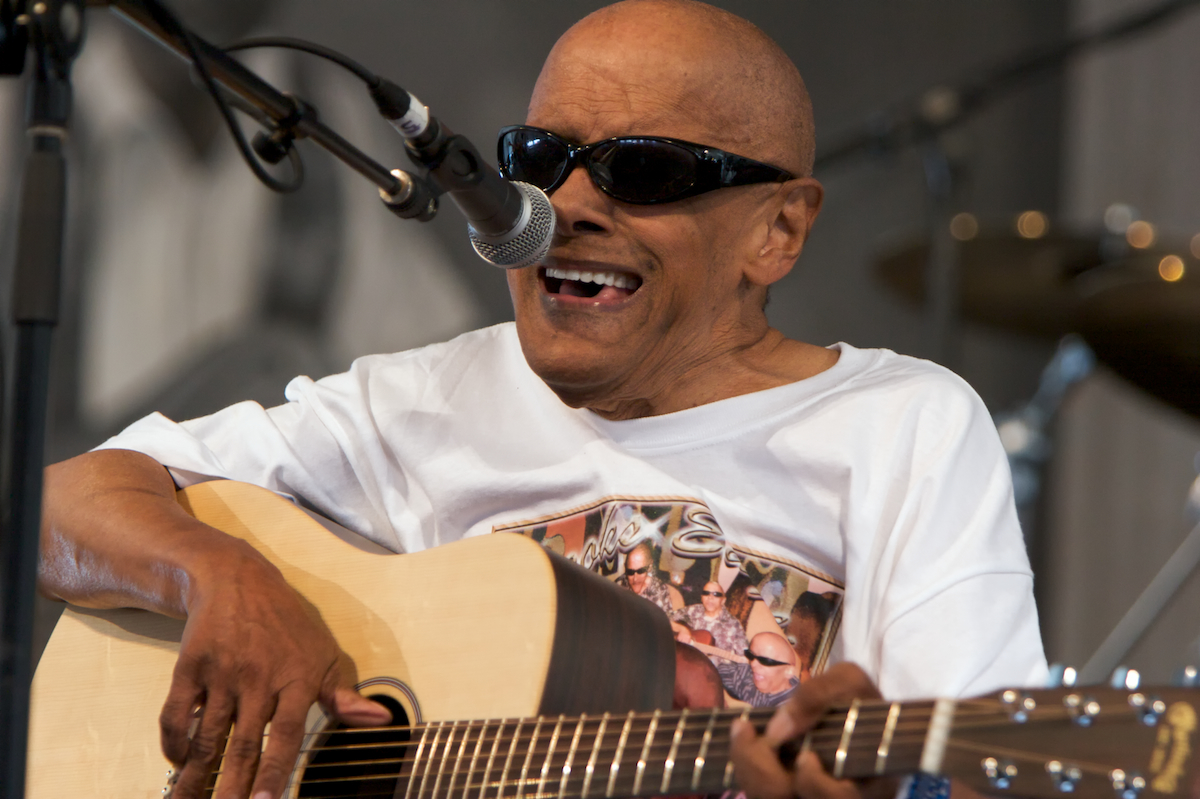
Three Jim Brock Photography prints raised over $1,100 for the Tipitina’s Foundation as part of this year’s Instruments A Comin’ event during Jazzfest.   The featured images were of Donald Harrison, Jr., James Singleton and Snooks Eaglin, with the Snooks image well exceeding the maximum suggested bid.  Jim Brock Photography is very pleased to have contributed to the Tipitina’s Foundation mission and encourages visitors to this site to support the Foundation and learn about Instruments A Comin’, the T.I.P intern program, Sunday workshops and more at www.tiptinasfoundation.org.


Snooks Eaglin, New Orleans Jazz and Heritage Festival, May 4, 2008

Snooks Eaglin, Jazzfest 2008

Donald Harrison, Jr., Jazzfest 2009

James Singleton, Jazzfest 2009

Posted in Latest News | Also tagged , , , , , , , , , , , , , , , , , Leave a comment